
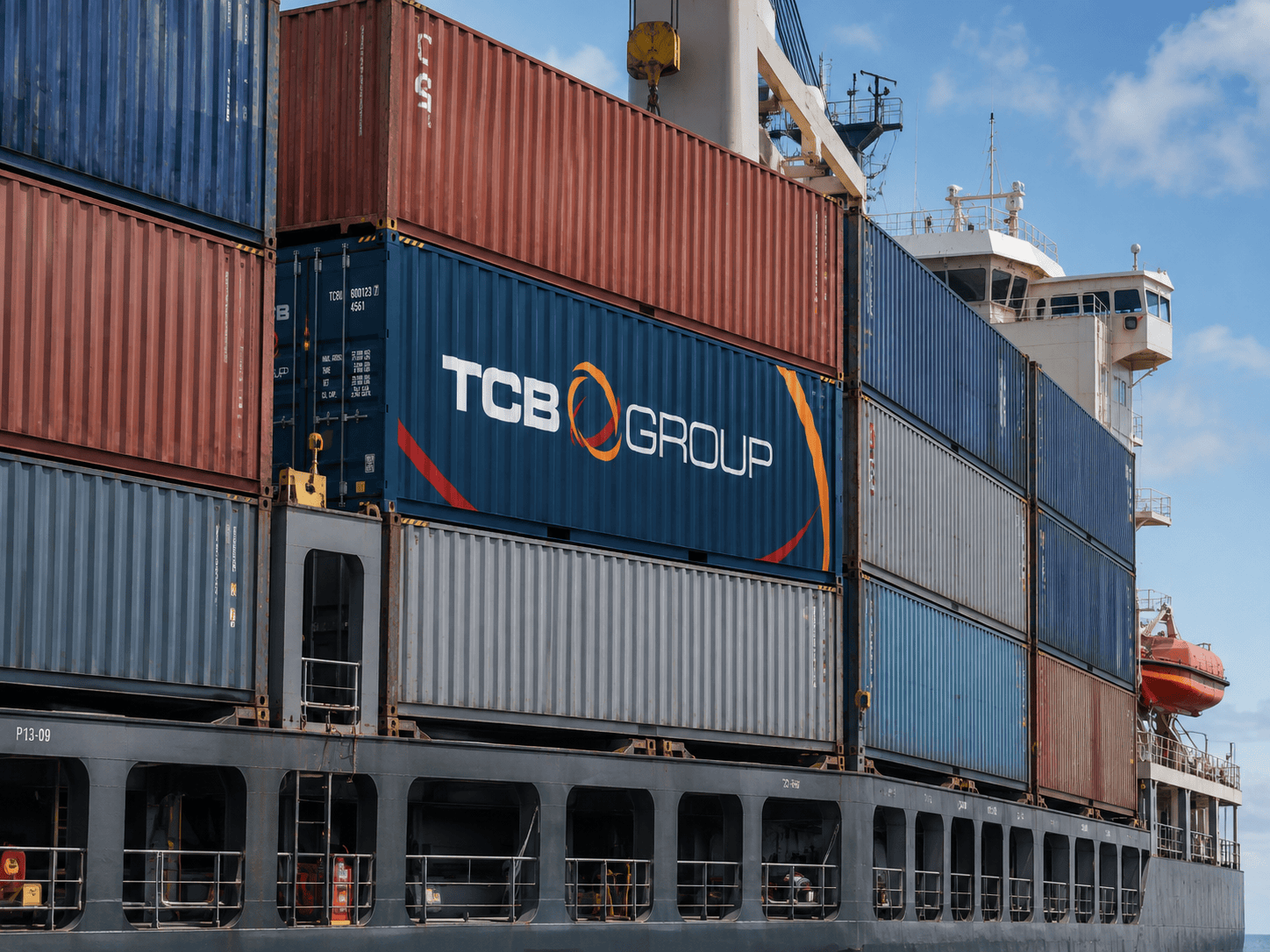
This guide explains shipping from South Africa to United Kingdom by sea and air, covering major ports, FCL and LCL options, customs requirements, UK warehousing and door-to-door delivery, with practical guidance for businesses planning reliable commercial freight into Britain.
Table of Contents
Shipping From South Africa to United Kingdom: Sea, Air and Door-to-Door Freight Solutions
Shipping from South Africa to United Kingdom is an important trade requirement for manufacturers, food and beverage suppliers, industrial businesses, retailers and distributors moving commercial goods into Britain. The right freight solution depends on cargo type, volume, origin, urgency and final UK delivery requirements.
Sea freight is generally the strongest option for larger or cost-sensitive consignments, while air freight is better suited to urgent, high-value or time-sensitive cargo. A reliable shipment should be planned from the South African collection point through export clearance, international transport, UK customs and final delivery.
TCB Group supports shipping from South Africa to United Kingdom through its international freight network and UK operation in St Helens, near Liverpool. Sea freight, IATA-accredited air freight, customs management, bonded warehousing, cargo handling and onward delivery can all be coordinated through one service.
What Are the Main Options for Shipping From South Africa to United Kingdom?
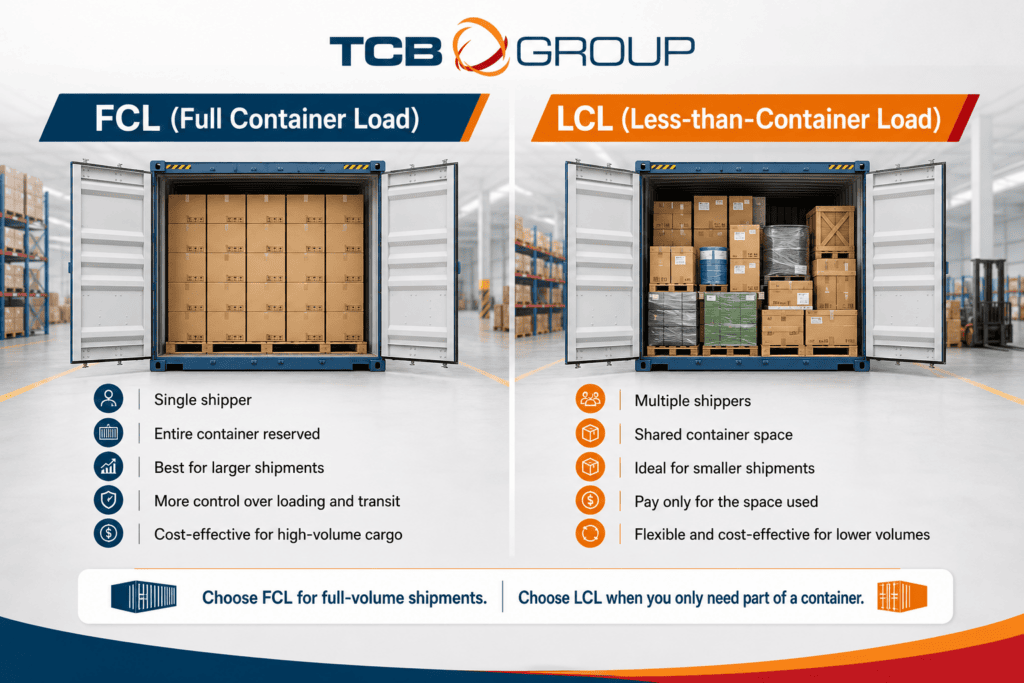
When should you choose FCL sea freight?
Full Container Load, or FCL, is often the most practical option when cargo volumes justify dedicated container space. The shipper uses the container for its own goods, reducing consolidation handling and giving greater control over loading and container planning.
Common equipment includes 20-foot, 40-foot and 40-foot high-cube containers. The right choice depends on weight, dimensions, cargo density, loading method and delivery requirements. For regular Shipping From South Africa to United Kingdom, FCL can also support repeat purchasing and inventory programmes.
When does LCL shipping make more sense?
Less Than Container Load, or LCL, is designed for commercial shipments that do not require a full container. Several compatible consignments share the same unit, allowing each shipper to pay for the space used rather than an entire container.
For palletised, crated or lower-volume cargo, TCB Group’s LCL shipping guide explains how LCL compares with FCL and when consolidation can provide better value.
When should businesses use air freight?
Air freight can suit urgent components, high-value goods, samples, specialist equipment, perishables and stock where delivery speed is commercially important. TCB Group is an IATA-accredited air freight agent in the UK, providing an established option when sea freight cannot meet the required timescale.
“Shipping from South Africa to United Kingdom covers a surprisingly broad mix of cargo. From fruit and fresh produce to vehicles, metals and industrial raw materials, the trade lane supports both consumer supply chains and major manufacturing sectors across the UK.” – Shane Delargy, TCB Group
Which South African Ports Are Commonly Used for UK Freight?
How should the export port be selected?
South Africa has several important commercial ports. Transnet Port Terminals operates container terminals at Durban, Cape Town, Ngqura and Port Elizabeth, making these the key container gateways to consider for shipping from South Africa to United Kingdom.
- Durban, the major container gateway for KwaZulu-Natal and inland cargo from Johannesburg and Gauteng
- Cape Town, serving the Western Cape and major export sectors including food, beverage and manufactured goods
- Ngqura, a deep-water container hub in the Eastern Cape near the Coega Special Economic Zone
- Port Elizabeth, serving Eastern Cape manufacturers and regional commercial cargo
The strongest origin is not always the closest port on a map. Supplier location, inland haulage, sailing schedules, equipment availability and the final UK destination should all be compared before the route is selected.
Official terminal information is available from Transnet Port Terminals, which confirms container operations at Durban, Cape Town, Ngqura and Port Elizabeth.
Which UK Ports Receive Freight From South Africa?
What are the main UK container gateways?
South African sea freight can connect into several major UK container ports, including Felixstowe, Southampton, London Gateway, Liverpool and Tilbury. The exact routing depends on the South African origin, carrier schedule and whether the service is direct or uses a transhipment hub.
The UK destination should influence port selection. Businesses in North West England can benefit from efficient access to Liverpool, while importers elsewhere may find another gateway provides a stronger total inland solution.
TCB Group can coordinate port collection and onward haulage, allowing shipping from South Africa to United Kingdom to be compared on full door-to-door cost rather than the headline ocean rate alone.
How Does TCB Group’s Liverpool Bonded Warehouse Support South African Imports?
What happens after the shipment reaches the UK?
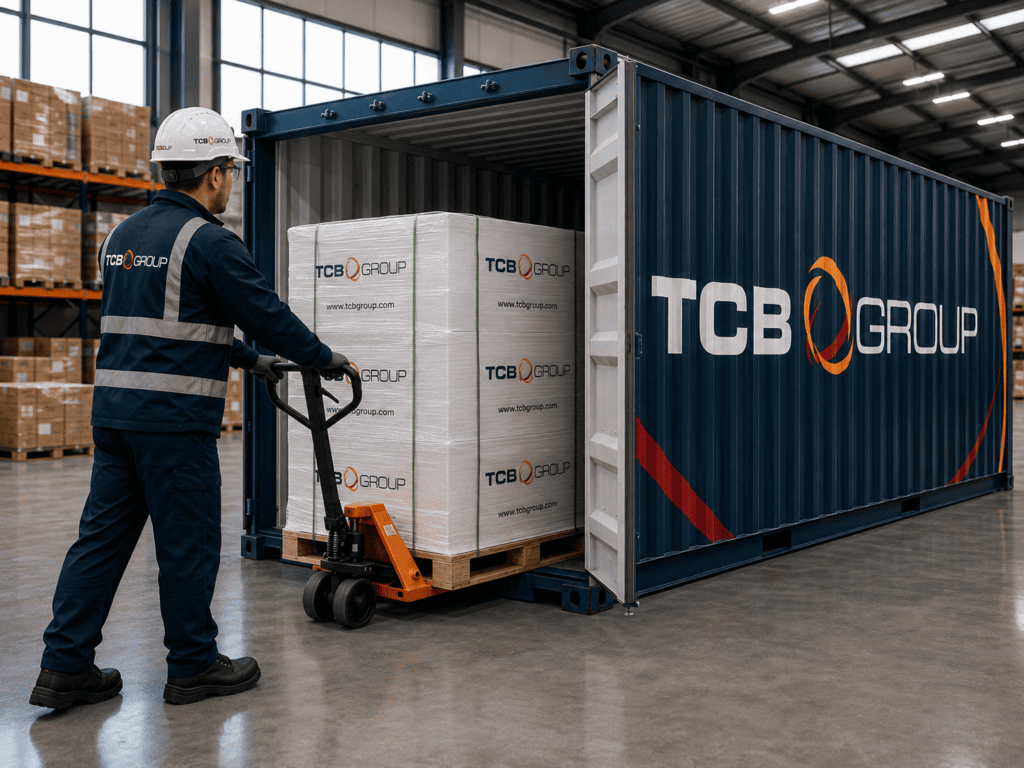
Arrival at the port is only one stage of the freight movement. Importers may still require customs clearance, container devanning, pallet handling, short-term storage, bonded warehousing or onward distribution before goods are ready for sale or production.
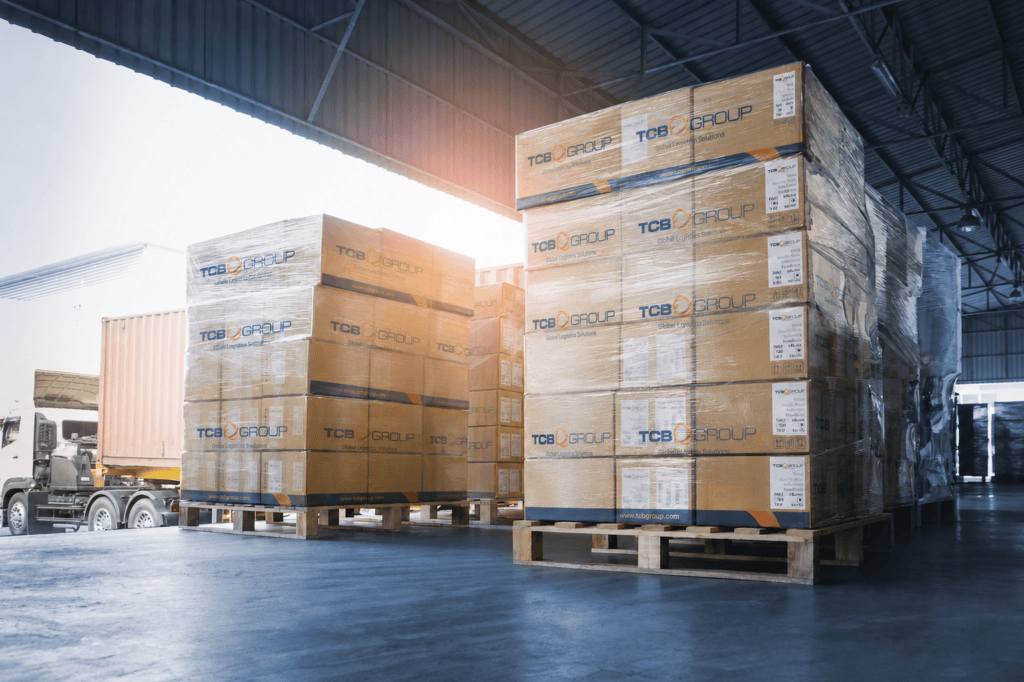
TCB Group operates an in-house bonded CFS warehouse facility in Liverpool. This gives the UK team direct involvement in cargo handling and provides a practical option for goods that need to be unloaded, stored, consolidated or prepared for final delivery.
The facility is particularly useful for customers across Liverpool, Manchester, Warrington, Cheshire and the wider North West. By combining freight, customs, warehousing and delivery, TCB Group can reduce unnecessary operational hand-offs after Shipping From South Africa to United Kingdom.
Learn more about TCB Group’s UK freight forwarding and warehousing operation.
What Customs Rules Apply When Shipping From South Africa to United Kingdom?
What does the South African exporter need to manage?
Commercial goods leaving South Africa are subject to export customs requirements. South African Revenue Service guidance states that exporters must be registered with Customs and that a goods declaration is generally required before goods are exported, unless a specific exemption applies.
Current export guidance is available directly from the South African Revenue Service. SARS also notes that restricted goods may require permits, licences or certificates before clearance.
What does the UK importer need to prepare?
Commercial goods entering Great Britain require the appropriate UK customs declaration. Importers should confirm the commodity code, customs value, origin, importer details and whether product-specific licences or controls apply.
The official GOV.UK importing goods guide explains the process. Businesses importing into England, Wales or Scotland generally need a GB EORI number.
TCB Group can coordinate UK customs clearance alongside shipping from South Africa to United Kingdom, helping importers avoid managing the international carrier, customs broker, warehouse and delivery provider separately.
What Documents Are Needed for South Africa-to-UK Freight?
Which documents are commonly required?
Accurate documentation is essential for reliable shipping from South Africa to United Kingdom. The exact requirements depend on the commodity and freight mode, but commonly include:
- Commercial invoice
- Packing list
- Bill of lading for sea freight or air waybill for air freight
- Commodity or tariff classification
- Importer and exporter details
- Country of origin information
- Incoterms
- Export permits, licences, phytosanitary or other certificates where applicable
South African exports can include agricultural, food, chemical, industrial and manufactured products, so commodity-specific controls should be checked before collection. Good documentation at origin helps prevent avoidable customs queries after the cargo reaches Britain.
How Should Businesses Compare Sea and Air Freight From South Africa?
How do cost, size and urgency affect the decision?
Sea freight normally provides the stronger economics for larger, heavier or less urgent cargo. FCL is suited to higher volumes, while LCL gives smaller commercial shipments access to ocean freight without paying for a full container.
Air freight is more expensive, but it can be commercially sensible for urgent production parts, specialist goods, high-value cargo or perishable products where delivery speed has a direct impact on the wider supply chain.
A proper shipping from South Africa to United Kingdom comparison should include collection, export charges, main freight, destination handling, customs, warehousing and final delivery. The lowest port-to-port rate is not always the lowest overall logistics cost.
“The freight mode should always be chosen around what the cargo actually needs. For some South African imports, cost makes sea freight the obvious choice. For urgent or high-value goods, air will be the better commercial decision.” – Shane Delargy, TCB Group
Can TCB Group Provide Door-to-Door Shipping From South Africa?
What can an end-to-end service include?
Door-to-door shipping from South Africa to United Kingdom can combine supplier collection, export coordination, sea or air freight, UK customs clearance, warehousing and final delivery. This creates one coordinated movement and reduces the number of separate providers the importer needs to manage.
For recurring imports, the service can also be built around regular supplier collections, agreed sailing or air freight options and repeat UK delivery requirements. This can improve planning and create clearer accountability across the complete supply chain.

What Information Is Needed for a South Africa-to-UK Freight Quote?
What should you provide at quotation stage?
For an accurate shipping from South Africa to United Kingdom quotation, provide:
- South African collection address or preferred export port
- UK delivery postcode
- Commodity description
- Package count, dimensions and gross weight
- FCL container size or estimated cargo volume
- Incoterm
- Required collection or arrival date
- Dangerous goods, temperature control or other special handling requirements
- Customs, warehousing or delivery requirements
With this information, TCB Group can compare the realistic FCL, LCL and air freight options and build the quotation around the complete door-to-door movement.
Why Choose TCB Group for Shipping From South Africa to United Kingdom?
TCB Group combines global freight forwarding with an established UK operation capable of managing the destination side of South African imports. Sea freight, IATA-accredited air freight, customs management, bonded warehousing and onward delivery can all be coordinated through the same team.
The in-house Liverpool bonded warehouse is especially valuable for customers across North West England that need local cargo handling, storage or staged distribution after arrival. For wider UK destinations, TCB Group can build the service around the most practical port, airport and final delivery route.
If you are planning a one-off shipment or regular import programme, contact TCB Group for a tailored quotation. Our UK team can compare FCL, LCL and air freight solutions and coordinate the shipment from South African collection through to UK customs and final delivery.

Frequently Asked Questions About Shipping From South Africa to United Kingdom
What is the best way to ship freight from South Africa to the UK?
The best option depends on cargo size, urgency and budget. FCL suits larger shipments, LCL works well for smaller commercial consignments, and air freight is useful when speed is critical. Compare the complete door-to-door cost before choosing.
Which South African ports are commonly used for UK freight?
Key container gateways include Durban, Cape Town, Ngqura and Port Elizabeth. The correct port depends on the supplier location, inland haulage, carrier schedule and final UK destination rather than simply choosing the nearest major port.
Which UK ports receive freight from South Africa?
Common UK container gateways include Felixstowe, Southampton, London Gateway, Liverpool and Tilbury. The best arrival port depends on carrier routing, transhipment arrangements and the final UK delivery point.
Do South African exports require customs declarations?
Yes. SARS states that exporters must be registered with Customs and that a goods declaration is generally required before export unless an exemption applies. Restricted goods can also require additional permits, licences or certificates.
Can TCB Group arrange air freight from South Africa to the UK?
Yes. TCB Group is an IATA-accredited air freight agent in the UK and can arrange international air freight for urgent, high-value and time-sensitive cargo, including customs clearance and final UK delivery where required.
Can TCB Group provide warehousing after UK arrival?
Yes. TCB Group operates an in-house bonded CFS warehouse facility in Liverpool. It can support devanning, bonded storage, cargo handling, consolidation and onward distribution for shipments arriving from South Africa.