
Freight management brings transport, customs, warehousing and shipment visibility into one coordinated process. This guide explains how businesses can reduce complexity, improve control and work with TCB Group’s North West England team to manage road, air and sea freight worldwide.
Table of Contents
Freight Management Services: How to Simplify International Shipping
For businesses moving goods internationally, freight coordination can quickly become more complicated than arranging transport from A to B. Each shipment may involve collections, carriers, ports, customs declarations, warehouses, overseas partners and final-mile delivery, often across several transport modes.
Effective freight management brings these activities together. Instead of managing every stage separately, a business can use one experienced logistics partner to plan routes, coordinate suppliers, manage documentation, track progress and respond when something changes.
For companies across Liverpool, Manchester, Warrington, Cheshire, Lancashire and the wider North West of England, TCB Group provides this support from our St Helens operation. We manage international freight by road, air and sea, combining transport with customs, warehousing and destination services where required.
What Is Freight Management?
Freight management is the coordinated planning, booking, movement and oversight of goods through a supply chain. It covers more than choosing a carrier. Strong freight management considers the complete journey, the cargo, timescale, cost, documentation, customs requirements and what needs to happen before and after the main international movement.
How does freight management work in practice?
A typical process starts by understanding the shipment and the commercial priorities behind it. That means confirming the origin, destination, cargo type, dimensions, weight, Incoterms, required delivery date and any handling or regulatory requirements.
From there, freight management can include route planning, carrier selection, booking, export documentation, customs coordination, collection, warehousing, international transport, import clearance, delivery and shipment updates. For regular shippers, it can also involve reviewing routes and costs over time rather than treating every shipment as an isolated booking.
“Good freight management is about removing unnecessary complication. The customer should not need to chase five different suppliers to understand where one shipment is or what happens next.” — Shane Delargy, TCB Group

What Problems Does Freight Management Solve?
International shipping becomes difficult when responsibility is fragmented. A manufacturer may use one haulier for collection, another company for customs, a separate freight forwarder for the international leg and a different partner at destination. That structure can work, but it creates more administration and more opportunities for information to be lost between parties.
Can it reduce fragmented logistics providers?
Centralised freight management gives one provider responsibility for coordinating the complete movement. This is particularly valuable for companies importing components from several countries, exporting to multiple markets or using a mixture of road, air and sea freight depending on urgency and shipment size.
Can it improve shipment visibility?
Useful freight management gives the customer a clear view of what has been booked, where cargo is within the process, which documents are available and whether an issue needs action.
Can it reduce repeated administration?
Using a consistent freight management partner can reduce duplicated emails, repeated data entry and the need to brief new suppliers for every movement. It also gives the logistics provider a better understanding of the customer’s products, routes, delivery requirements and recurring pressure points.
What Are the Benefits of Centralising Freight Management?
The main benefit of centralised freight management is control. A business has a clearer view of who is responsible for each stage and can make transport decisions based on the whole supply chain rather than one freight rate in isolation.
Better route and cost control
The cheapest headline rate is not always the lowest total cost. A slower route may increase stockholding. A poorly planned shipment may incur storage, demurrage or additional handling. Air freight may cost more than sea freight but protect a production deadline. Freight management helps compare these trade-offs and select the most appropriate option for the shipment.
Consistent service levels
When one logistics partner coordinates recurring freight, collection instructions, documentation checks, reporting expectations and escalation procedures can become consistent across routes.
Clearer accountability
When a shipment is delayed, the important question is not only where it stopped but who is taking action. Centralised freight management gives the customer a defined point of contact that can coordinate carriers, overseas agents, customs teams and delivery partners on their behalf.
How Does Freight Management Simplify Multimodal Shipping?
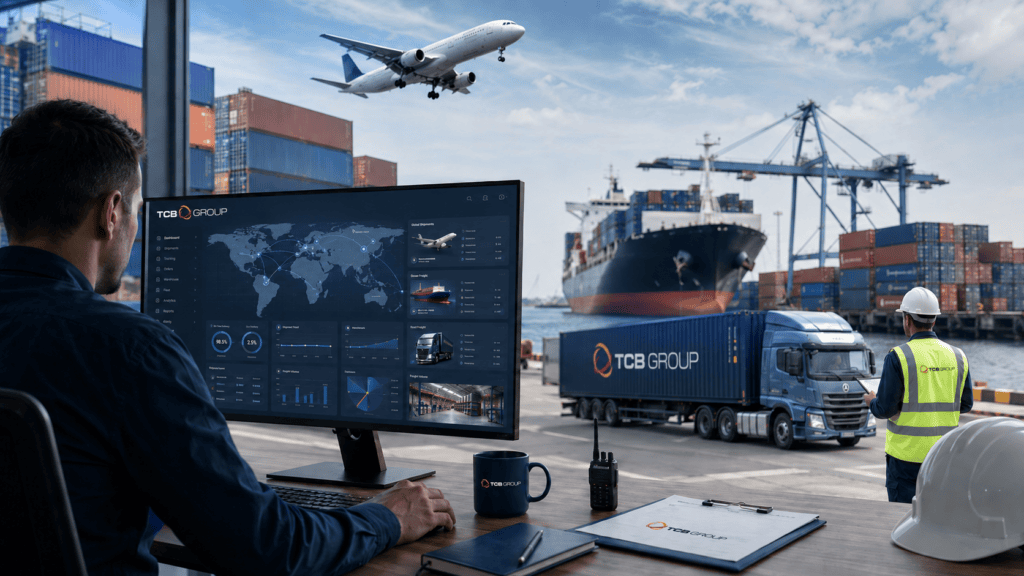
Many international supply chains cannot be managed effectively through a single transport mode. Businesses may use road freight for European deliveries, sea freight for planned long-distance movements and air freight for urgent or high-value cargo. The right option can also change from one shipment to the next.
A multimodal freight approach allows these choices to be made within one wider logistics plan. TCB Group’s UK team manages road, sea and air freight services, allowing customers to discuss the shipment requirement first and then select the transport solution that best fits cost, transit time, cargo type and destination.
Road freight across the UK and Europe
For businesses trading with Europe, road freight offers flexible options for pallets, groupage, part loads and full loads. TCB Group’s North West operation provides access to European freight services from St Helens, supporting collections and deliveries across the region and onward movements throughout Europe.
Sea freight for global imports and exports
Sea freight is well suited to larger, planned and less time-sensitive shipments. Freight management can coordinate full container loads, less than container load movements and the inland stages before and after the ocean journey, including collection, warehousing, customs and final delivery.
Air freight for urgent and time-critical cargo
Air freight provides speed when delivery times are tight. Used within a wider freight management strategy, it can support urgent replenishment, samples, spares, high-value goods and shipments where the cost of delay is greater than the additional transport cost.
How Do Customs and Warehousing Fit into Freight Management?
Transport is only one part of international shipping. Customs and warehousing can have an equally important effect on whether goods move smoothly from supplier to destination.
For imports into Great Britain, businesses need to meet customs requirements such as having the correct EORI details, commodity classification and declaration information. GOV.UK provides step-by-step guidance for businesses importing goods into the UK. Incorporating customs planning into freight management helps identify requirements before cargo reaches the border and reduces avoidable delays caused by missing or inconsistent information.
Warehousing can also support a more efficient flow of goods. TCB Group provides warehousing from our North West facility, allowing freight, storage, cargo handling and onward distribution to be coordinated within the same wider process. This can be particularly useful for imported stock, consolidation, cross-docking or businesses that need goods held before onward delivery.
“The real value appears when transport, customs and warehousing stop being separate conversations. When those elements are planned together, there is much more scope to improve efficiency, add reliability and simplify the customer’s workload.” — Lewis Rowland, TCB Group
How Does Technology Support Freight Management?
Technology supports freight management by making shipment information easier to access and act on. Customers should be able to see key milestones, retrieve documents and receive useful updates without relying entirely on manual email exchanges.
Tracking and document management
Central access to shipment status and documentation can make day-to-day logistics administration much simpler. It also gives purchasing, operations and finance teams a more consistent source of information when they need to check progress or retrieve transport documents. TCB Group have an online portal allowing customers to log-in and track their shipments, with access everything they need instantly.
Better decisions from shipment data
For businesses with regular international freight, historic shipment data can help identify recurring routes, seasonal peaks, frequent exceptions and opportunities to consolidate volumes. Good freight management uses this information to improve future planning rather than simply reporting what has already happened.
Technology is most valuable when accurate shipment data is combined with people who understand carriers, customs, routes and the practical options available when a plan changes.

Why Choose TCB Group for Freight Management in North West England?
TCB Group’s UK operation provides direct freight forwarding and freight management services to businesses, with our St Helens base positioned to support companies across the North West of England. From Liverpool and Manchester to Warrington, Cheshire, Lancashire and surrounding areas, customers can access international logistics support through a locally based team connected to a global network.
Our freight management capability brings together the services that international shippers commonly need:
- International road, air and sea freight
- UK and overseas collections and deliveries
- Customs clearance and shipping documentation support
- Warehousing, cargo handling and distribution from the North West
- Freight consolidation and multimodal routing
- Support for specialist, oversized and dangerous goods movements where required
- International partner coverage through established logistics networks
Freight management delivers the greatest value where a company has recurring shipments, multiple suppliers, several destinations or a mixture of transport modes. A coordinated approach can reduce workload and give the business a clearer view of its international shipping activity.
Businesses can also use our freight consultancy services where the requirement goes beyond day-to-day shipment execution and involves reviewing routes, processes or broader supply chain efficiency.
How Can North West Businesses Get Started with Freight Management?
The starting point is to review how freight is managed today. Identify the number of providers involved, the main international routes, the transport modes used, common delays, recurring administration and areas where visibility is weak.
Then give a freight management provider enough information to understand the full requirement rather than asking only for a rate on one shipment. Useful information includes shipment frequency, origins and destinations, typical cargo sizes, Incoterms, current transport modes, service priorities and any customs, warehousing or specialist handling needs.
TCB Group can review these requirements with businesses across North West England and recommend a practical structure for managing the freight. This may involve consolidating services under one point of contact, improving routing, integrating warehousing or customs, or simply creating a more consistent process for recurring international shipments.
If your business is managing several freight providers, multiple international routes or a mixture of road, air and sea freight, speak to TCB Group about simplifying the process. Our St Helens team can assess your current shipping requirements and build a freight management solution around the way your business actually operates.
Frequently Asked Questions About Freight Management
What is freight management?
Freight management is the coordinated planning and control of goods moving through a supply chain. It can include routing, carrier booking, collection, customs, documentation, warehousing, tracking, international transport and final delivery, all managed as one connected process.
What is the difference between freight management and freight forwarding?
Freight forwarding focuses on arranging the physical movement of goods. Freight management is broader and can include ongoing route planning, supplier coordination, shipment visibility, customs, warehousing, reporting and optimisation across multiple shipments, transport modes and logistics providers.
Can one provider manage road, air and sea freight?
Yes. A multimodal freight management provider can coordinate road, air and sea freight according to each shipment’s cost, urgency, size and destination. This gives businesses one point of contact while retaining flexibility over the transport mode used.
How can freight management reduce logistics costs?
Freight management can reduce unnecessary costs by improving route selection, consolidating shipments, matching transport modes to urgency, reducing duplicated administration and identifying avoidable storage or handling. The objective is to manage total logistics cost, not simply chase the lowest freight rate.
What shipment visibility should a freight provider offer?
Useful shipment visibility should show key milestones, current status, important documents and exceptions that require action. For regular shippers, reporting should also help identify recurring routes, delays and opportunities to improve future freight planning.
Does TCB Group provide freight management in North West England?
Yes. TCB Group operates from St Helens and supports businesses across Liverpool, Manchester, Warrington, Cheshire, Lancashire and the wider North West with international road, air and sea freight, customs support, warehousing and coordinated delivery services.