

This guide explains how supply chain optimisation can reduce costs, improve visibility and strengthen resilience by combining freight consolidation, strategic warehousing and control tower logistics, with practical examples of how TCB Group supports complex international and regional supply chains.
Table of Contents
Supply Chain Optimisation: Using Consolidation, Warehousing and Control Tower Logistics
International supply chains rarely become inefficient because of one major problem. More often, costs and delays accumulate through fragmented bookings, poorly positioned inventory, duplicated handling, limited visibility and reactive freight decisions. Effective supply chain optimisation aims to address these issues as part of one connected logistics strategy.
For companies sourcing internationally or distributing goods across multiple markets, significant improvements can often come from consolidating shipments, positioning inventory strategically and introducing stronger central coordination.
TCB Group supports international businesses with supply chain optimisation across road, air, rail and sea freight, supported by freight consolidation, warehousing, customs expertise and regional Logistics Control Tower services.
What Does Supply Chain Optimisation Mean?
Supply chain optimisation is the process of improving how goods, information and logistics activities move throughout a supply chain. The objective is to achieve the right balance between cost, speed, inventory availability, reliability and customer service.
It considers the entire journey rather than treating every freight movement as a separate transaction.
A company might negotiate a competitive sea freight rate but still operate inefficiently if goods are shipped separately from multiple suppliers, inventory is held in the wrong location or different logistics providers are working without central coordination.
Effective supply chain optimisation therefore looks beyond the headline freight rate.
How can supply chain optimisation improve efficiency?
The right approach depends on the business, but common objectives include:
- Reducing unnecessary freight movements
- Consolidating orders from multiple suppliers
- Improving transport mode and route selection
- Reducing repeated handling and administration
- Positioning stock closer to customers
- Improving shipment and inventory visibility
- Creating more predictable shipping schedules
- Reducing dependence on individual routes or carriers
- Identifying problems earlier
The starting point for supply chain optimisation is understanding where unnecessary cost, time or risk currently exists.
Where Do International Supply Chains Lose Efficiency?
International logistics becomes increasingly complex as businesses add suppliers, destinations, transport modes and service providers.
Individual shipments may all move successfully, while the overall supply chain remains inefficient.
How do fragmented shipments increase logistics costs?
Consider a UK, European or American company sourcing products from several suppliers across Asia.
If every supplier releases cargo and ships independently, the buyer may receive numerous smaller international shipments each month.
That can create repeated:
- Collections
- Export documentation
- Freight bookings
- Origin handling
- Customs activity
- Destination handling
- Final deliveries
- Supplier communication
This is where freight consolidation can become an important part of supply chain optimisation.
“One of the first things we look at when discussing supply chain optimisation is how often a business is moving partially filled shipments. When you examine the overall monthly flow rather than individual bookings, is there a more efficient way to organise it.” – Shane Delargy, TCB Group
Why do reactive freight decisions create additional costs?
Urgent freight is sometimes unavoidable. However, repeated reliance on premium air freight can point to wider planning problems. Perhaps inventory was ordered too late, a supplier missed a deadline or an earlier delay was not identified quickly enough.
A strong supply chain optimisation strategy looks at the underlying cause of recurring urgent movements, rather than simply finding a faster carrier each time.

How Can Freight Consolidation Improve Supply Chain Optimisation?
Freight consolidation combines multiple compatible shipments into larger, coordinated consignments. It is particularly effective for companies purchasing goods from multiple suppliers within the same country or region.
You can learn more about TCB Groups freight consolidation services here.
What is buyers’ consolidation?
Buyers’ consolidation involves combining goods from several suppliers before the main international freight movement. Instead of five Asian suppliers sending five separate LCL shipments to the same European customer, cargo can potentially be collected at a consolidation point and combined before export.
Depending on volumes, the consolidated shipment may then move as LCL or a full container.
This supports supply chain optimisation by potentially:
- Reducing the number of international shipments
- Simplifying documentation
- Reducing repeated handling
- Improving shipment visibility
- Creating predictable departure schedules
- Improving container utilisation
- Reducing duplicated logistics costs
For businesses with consistent purchasing patterns, consolidation can become part of the procurement strategy rather than simply an occasional freight-saving measure.
Can consolidation make shipping more predictable?
Yes. One of the main benefits is improved planning. Instead of responding to individual supplier releases throughout the month, companies can establish regular cargo cut-offs or consolidation schedules.
Suppliers deliver into a nominated warehouse or consolidation facility, with suitable cargo grouped for planned departures.
This creates a more structured freight flow and strengthens wider supply chain optimisation.
How Can Warehousing Improve Supply Chain Optimisation?
Warehousing should not simply be viewed as somewhere goods sit between transport movements.
Used strategically, warehousing can play an active role in supply chain optimisation by positioning inventory closer to demand and creating central points for consolidation and distribution. You can learn more about TCB Groups warehousing solutions here.
How does regional warehousing improve distribution?
Regional warehousing allows businesses to hold selected stock closer to customers.
Singapore provides a strong example for companies distributing across Southeast Asia.
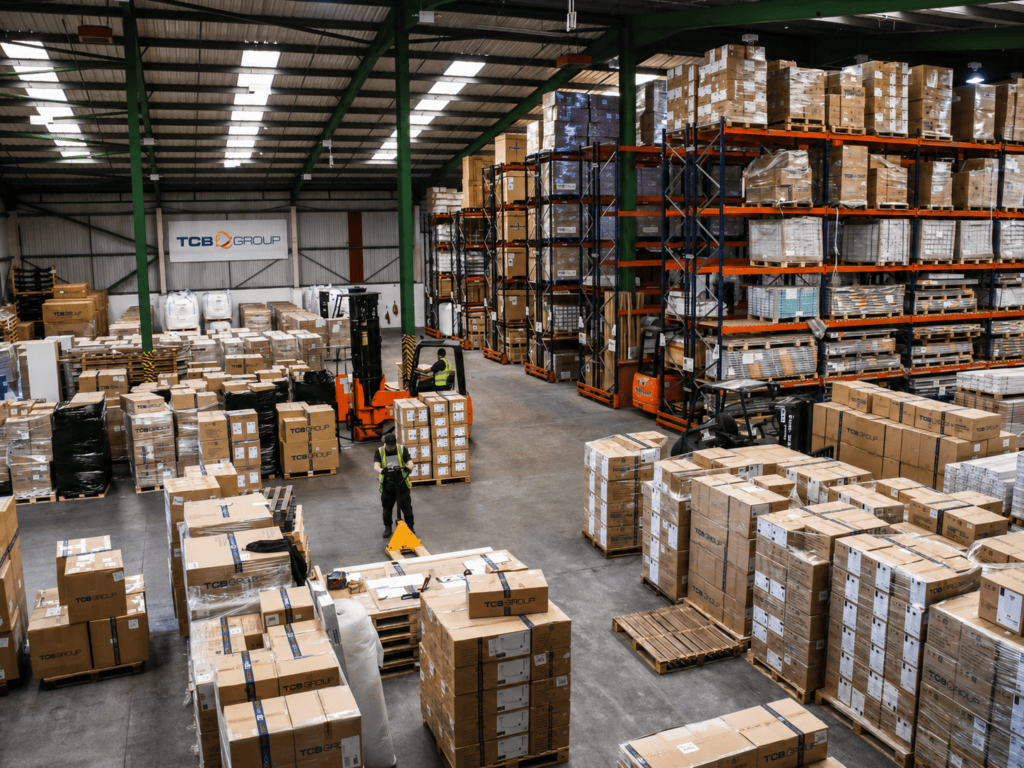
TCB Group operates a 30,000 sq. ft. warehouse at Tuas in Singapore, supporting storage, consolidation, deconsolidation and regional distribution.
A European or American company can potentially move larger quantities of inventory into Singapore and release goods onwards to individual Asian markets according to customer demand.
This can support:
- Faster regional response times
- Consolidated inbound freight
- Flexible onward distribution
- Improved inventory visibility
- Reduced dependence on repeated long-haul shipments
Singapore’s Free Trade Zone framework can also provide advantages for suitable cargo stored pending transhipment or re-export, subject to applicable customs requirements. You can read Singapore Customs Free Trade Zone guidance here.
How can warehousing support freight consolidation?
Warehouses can serve as coordination points at both origin and destination.
At origin, cargo from several suppliers can be collected and consolidated before export.
At destination, larger shipments can be deconsolidated and individual orders prepared for final delivery.
The warehouse therefore connects procurement, freight forwarding and distribution as part of a wider supply chain optimisation strategy.

What Is a Logistics Control Tower?
A Logistics Control Tower provides centralised coordination and visibility across a supply chain.
It can bring suppliers, purchase orders, freight bookings, documentation, inventory information and shipment milestones into one management structure.
You can learn more about TCB Groups expert control tower services across Asia here.
How does centralised logistics management reduce complexity?
A company sourcing from China, Vietnam, Thailand, Malaysia and Indonesia could potentially deal with numerous suppliers and logistics providers.
Managing all that activity independently can create a significant administrative burden.
TCB Group operates Logistics Control Tower services from Singapore, allowing international customers to centralise management of APAC freight activity through a team operating within Asian business hours.
Services can include:
- Supplier coordination
- Purchase-order monitoring
- Cargo-readiness checks
- Collection planning
- Freight booking
- Document management
- Shipment tracking
- Inventory coordination
- Exception management
- Reporting
- Onward distribution planning
The value is not simply having more tracking information. Effective supply chain optimisation depends on using that information to make better decisions.
Why is exception management important?
International freight does not always move according to plan.
Suppliers can miss production deadlines, cargo can miss a sailing, documents may be incomplete and capacity can change.
Effective exception management identifies issues early and determines what action is required.
That might involve changing a collection, booking another sailing, moving critical stock by air or adjusting inventory elsewhere.
“Good supply chain optimisation is not about assuming everything will run perfectly. It is also about creating enough visibility and flexibility to react quickly when circumstances change without disrupting business operations.” – Eldon Hui, TCB Group
How Do Consolidation, Warehousing and Control Towers Work Together?
The greatest benefits often come when consolidation, warehousing and central management work together.
For example, a company with suppliers across Southeast Asia could use the following supply chain optimisation model:
- Suppliers are coordinated through a regional Logistics Control Tower.
- Purchase orders and cargo readiness are monitored centrally.
- Suitable supplier shipments are consolidated.
- Inventory is moved into a strategically located warehouse.
- Stock levels are monitored.
- Goods are released according to customer demand.
- Regional and international freight is coordinated from the same hub.
- Exceptions are managed through one central point.
This connects information, inventory and freight movements rather than managing them independently.
For companies operating across Asia, TCB Group’s Singapore operation combines freight forwarding, consolidation, warehousing and Logistics Control Tower capabilities within one regional logistics platform.
How Can Multimodal Freight Strengthen Supply Chain Resilience?
Cost is important, but the cheapest individual shipment does not always produce the strongest supply chain.
Businesses also need resilience and flexibility.
Why should businesses use different transport modes?
Road, air, rail and sea freight each serve different requirements.
A strong supply chain optimisation strategy can allocate different modes according to urgency, value and customer requirements.
For example:
- Routine international replenishment may move by sea
- Smaller shipments may use consolidated LCL
- Critical components may move by air
- European pallets may move by road groupage
- Alternative modes can provide contingency options
TCB Group provides freight forwarding by road, air, rail and sea, enabling businesses to integrate multiple transport modes into one wider logistics strategy. You can learn more about TCB Group’s international freight forwarding services here.
How Does TCB Group Support Supply Chain Optimisation?
TCB Group operates logistics hubs across Ireland, the United Kingdom and Singapore, supporting international freight movements and regional supply chains.
Our approach to supply chain optimisation focuses on practical improvements to how freight and inventory move.
Depending on requirements, this can include:
- International freight forwarding
- Freight consolidation
- Buyers’ consolidation
- Warehousing
- Inventory management
- Regional distribution
- Customs support
- Multimodal transport planning
- Logistics Control Tower services
- Shipment and exception management
Rather than viewing every shipment as a standalone booking, our teams can assess how suppliers, cargo volumes, warehousing requirements, transport modes and destinations interact.
For a company sourcing across Asia, that may involve using Singapore for supplier coordination, consolidation, warehousing and regional distribution.
For another business, supply chain optimisation may simply mean replacing several fragmented shipments with one coordinated consolidation programme.
Could Your Supply Chain Be Working More Efficiently?
Supply chains naturally become more complex as businesses grow. New suppliers are added, freight volumes increase, markets change and additional logistics providers become involved. That makes periodic supply chain reviews valuable.
TCB Group can assess existing freight flows and identify practical opportunities for supply chain optimisation, including freight consolidation, strategic warehousing, multimodal transport and centralised Logistics Control Tower management.
If your business is managing multiple international suppliers, repeated freight movements or increasingly complex distribution requirements, speak to TCB Group about reviewing your logistics strategy.
Book a supply chain and logistics review with TCB Group.
Frequently Asked Questions
What is supply chain optimisation?
Supply chain optimisation improves how goods, inventory and logistics processes move through a supply chain. It typically focuses on reducing unnecessary costs, improving transport planning, increasing visibility, positioning inventory effectively and strengthening overall service reliability.
How can freight consolidation reduce costs?
Freight consolidation combines compatible smaller shipments into larger consignments. This can reduce duplicated collection, handling, documentation and freight activity while creating more predictable shipment schedules for companies purchasing from multiple suppliers.
What is a Logistics Control Tower?
A Logistics Control Tower provides centralised oversight of logistics activity, including suppliers, purchase orders, shipments, documentation and exceptions. It helps companies coordinate complex international supply chains through one central management point.
How does warehousing improve supply chain efficiency?
Strategically located warehousing can position inventory closer to customers, support consolidation and deconsolidation, improve stock visibility and enable more flexible regional distribution as part of a wider supply chain optimisation strategy.
What is buyers’ consolidation?
Buyers’ consolidation combines products purchased from several suppliers before international transport. This can reduce the number of individual shipments, improve planning and help reduce duplicated logistics activity.
Can TCB Group review an existing supply chain?
Yes. TCB Group can review freight flows, consolidation opportunities, warehousing requirements, transport modes and regional coordination to identify practical opportunities for supply chain optimisation.