
TCB Group moves dangerous goods by air, sea and road from Belfast, Liverpool, Dublin and Singapore as an IATA accredited forwarder, with trained staff, compliant packing and documentation, and dangerous goods storage in our warehouses.
Need a dangerous goods shipping quote? Send our team the cargo details, classification where known, origin, destination, weight and dimensions. We can review the requirements and provide the appropriate air or sea freight quotation.
Request a dangerous goods shipping quote →

What We Handle By Mode
Dangerous goods shipping requires more preparation than general freight. The goods must be correctly classified, packed, marked, labelled and supported by the appropriate documentation before transport. Requirements and restrictions also vary depending on whether the shipment is travelling by air, sea or road.
TCB Group provides dangerous goods transport as part of our international freight forwarding services from Belfast, Liverpool, Dublin and Singapore. Our teams arrange dangerous and hazardous goods movements by air, sea and road, including the associated transport planning, documentation, packing and labelling requirements.
For air shipments, TCB Group is IATA accredited in the Republic of Ireland, Northern Ireland, Great Britain and Singapore. Our wider air freight network covers more than 700 airports through 250 airlines.
Our road freight services also include the movement of hazardous materials alongside standard and specialised cargo. For sea freight, the appropriate service depends on the cargo classification, quantity, packaging and route.
| Mode | Suitable service | What needs to be checked |
|---|---|---|
| Air freight | International dangerous goods movements, including urgent shipments | Classification, packing, labelling, documentation and airline acceptance |
| Sea freight | International hazardous cargo movements | Classification, packing, marking, documentation and carrier acceptance |
| Road freight | Domestic and European hazardous goods movements | Classification, packaging, labelling and applicable transport requirements |
Not every dangerous good can travel on every service. Restrictions can depend on the exact substance, quantity, packaging, route and carrier, so cargo should be assessed before a booking is made.
For more information about our wider network, see TCB Group’s IATA accredited air freight services and international air freight services.
DG Classes & The Modes They Can Travel By
Dangerous goods are divided into nine internationally recognised classes. Correct classification is an important first step because it affects how the cargo can be packed, labelled, documented and transported.
The nine classes are:
- Explosives
- Gases
- Flammable liquids
- Flammable solids, spontaneously combustible substances and goods that are dangerous when wet
- Oxidising substances and related dangerous goods
- Toxic and infectious substances
- Radioactive materials
- Corrosives
- Miscellaneous dangerous goods
The mode available for a shipment cannot be determined from its class alone. Restrictions vary between air, sea and road and can also depend on the specific material, quantity, packaging and carrier.
This is why accurate classification at the start of the process matters. Incorrect classification or use of unsuitable packaging and labels can result in delays, additional costs, fines or cargo being refused or confiscated.
For a specific shipment, provide the dangerous goods information to our team before booking so that the available transport options can be checked.
Packing, Labelling and Documentation
Dangerous goods must be prepared correctly before they enter the transport network. The sender is responsible for ensuring goods are correctly classified, packaged and marked for transport.
TCB Group can support the preparation and movement of dangerous goods, including:
- administration and transport documentation;
- checking cargo information before transport;
- packing requirements for dangerous goods;
- compliant marking and labelling;
- transport planning by air, sea or road; and
- coordination of the shipment through to its destination.
The exact documentation required depends on the cargo and transport mode. Staff involved in dangerous goods movements must also meet the relevant training and certification requirements.
Getting these details right before collection reduces the risk of cargo being delayed or rejected later in the shipment.
“We believe that most of the challenges associated with shipping dangerous goods are avoidable. In our experience being properly prepared, having the correct classification and supporting documentation, and appropriate packaging help eliminate a lot of potential problems and keep things moving smoothly.”
All dangerous goods shipping should be completed in full compliance with governmental and industry best practice.
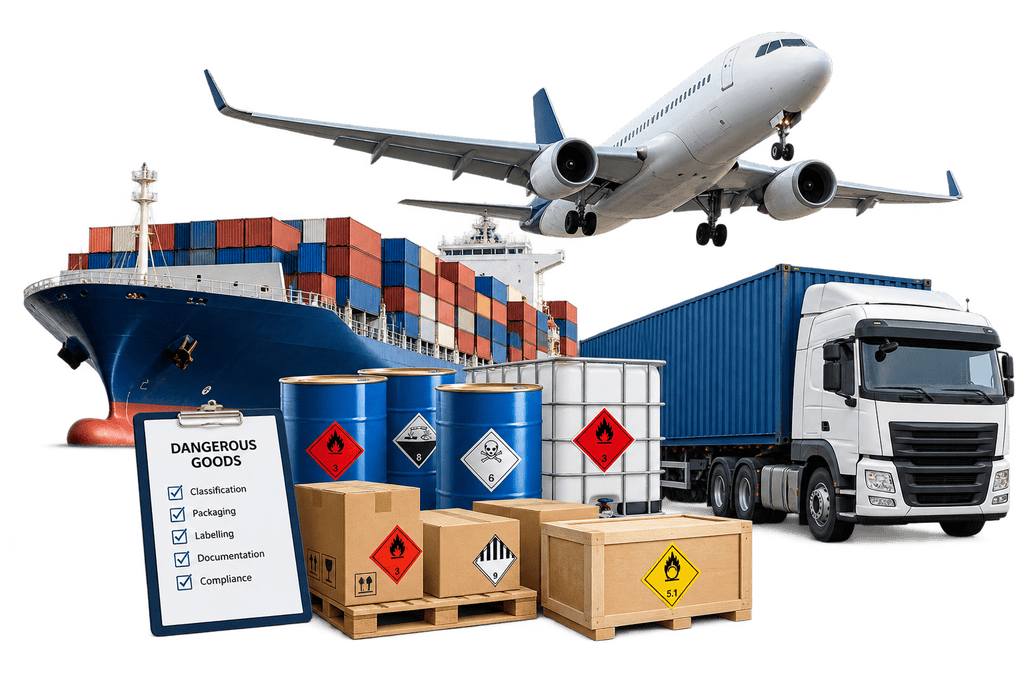
DG Storage
Some dangerous goods require storage before onward transport, consolidation or final delivery.
TCB Group provides dangerous goods storage as part of its warehousing operations. In Singapore, our 30,000 sq ft customs warehouse is located at Tuas Mega Port inside the Free Trade Zone and provides dangerous goods storage alongside customs warehousing, transhipment and distribution services.
Storage requirements depend on the classification and characteristics of the cargo. Our team therefore needs the shipment information before confirming whether a particular dangerous good can be accepted at a TCB Group facility.
Where storage forms part of a wider international movement, it can be coordinated with the appropriate air, sea or road freight service.
Batteries, Paints & Chemicals In Practice
Every dangerous goods shipment needs to be considered according to the actual cargo rather than simply being treated as general freight.
Batteries: If you need to ship batteries or equipment containing batteries, provide the product and dangerous goods information so our team can establish whether the shipment can be accepted and which transport options are available.
Paints and other hazardous materials: Products classed as dangerous goods require the correct classification, packing, labelling and supporting documentation before transport. The appropriate solution will depend on the material and the proposed mode.
Bulk liquids and chemicals: TCB Group’s UK freight services include ISO tank container logistics for bulk liquids and chemicals, including associated tank heating, cleaning and storage services.
Providing accurate information at quotation stage allows the team to identify potential restrictions before the cargo enters the transport process.
For a more detailed explanation of classifications and requirements, see our guide to shipping dangerous goods.
How To Get A Compliant Quote
The more information available at the start, the easier it is to assess a dangerous goods shipment correctly.
When requesting a quote, provide:
- origin and destination;
- cargo description;
- dangerous goods classification, where known;
- weight and dimensions;
- number and type of packages;
- preferred transport mode, if known; and
- any dangerous goods documentation already available.
Our team can then review the shipment requirements and determine the appropriate freight option.
TCB Group operates from Belfast, Liverpool, Dublin and Singapore, providing dangerous goods freight forwarding alongside our wider international air, sea and road services.
Frequently Asked Questions About Dangerous Goods Shipping
Which classes can go by air?
Dangerous goods are divided into nine classes, but the class alone does not determine whether a shipment can travel by air. Acceptance depends on the specific material, quantity, packaging and airline requirements, so the shipment details need to be assessed before booking.
What documents do I need?
Documentation depends on the dangerous goods involved and the mode of transport. Correct classification and supporting transport documentation should be established before the shipment is accepted, and our team can review the requirements as part of the quotation process.
Can you store dangerous goods?
Yes, dangerous goods storage is available as part of TCB Group’s warehousing services. Our Singapore operation specifically includes dangerous goods storage at the 30,000 sq ft customs warehouse at Tuas Mega Port; acceptance of individual products remains subject to their classification and storage requirements.
What dangerous goods shipping services does TCB Group provide?
TCB Group arranges dangerous goods transportation by air, sea and road, supported by packing, labelling, documentation and freight planning. Services are managed through our operations in Belfast, Liverpool, Dublin and Singapore.
Can TCB Group arrange international hazardous goods transport?
Yes. TCB Group provides international freight forwarding by air, sea and road from its offices in Belfast, Liverpool, Dublin and Singapore. The available service for hazardous cargo depends on its classification, route, packaging and transport requirements.
Request a dangerous goods shipping quote
If you have an upcoming dangerous goods shipment, send us the origin, destination, cargo details, classification where known, weight and dimensions. Our team can review the requirements and advise on the appropriate transport option.
Request an air freight quote →
For dangerous goods moving by sea, our team can also arrange the appropriate sea freight service and quotation.